Pydantic AI meal prep assistant
Sous-Chef AI
Sous-Chef AI is a Pydantic AI-powered meal prep assistant that treats recipes as a Directed Acyclic Graph of tasks — not a flat list. It generates parallelized Service Plans with mise en place gating, passive/active scheduling, and bilingual support.
Product walkthrough
Screens from a Coq au Vin and Mushroom Risotto demo: import recipes, parse them into DAG steps, generate a parallel timeline, run mise en place, and cook with live chef nudges.
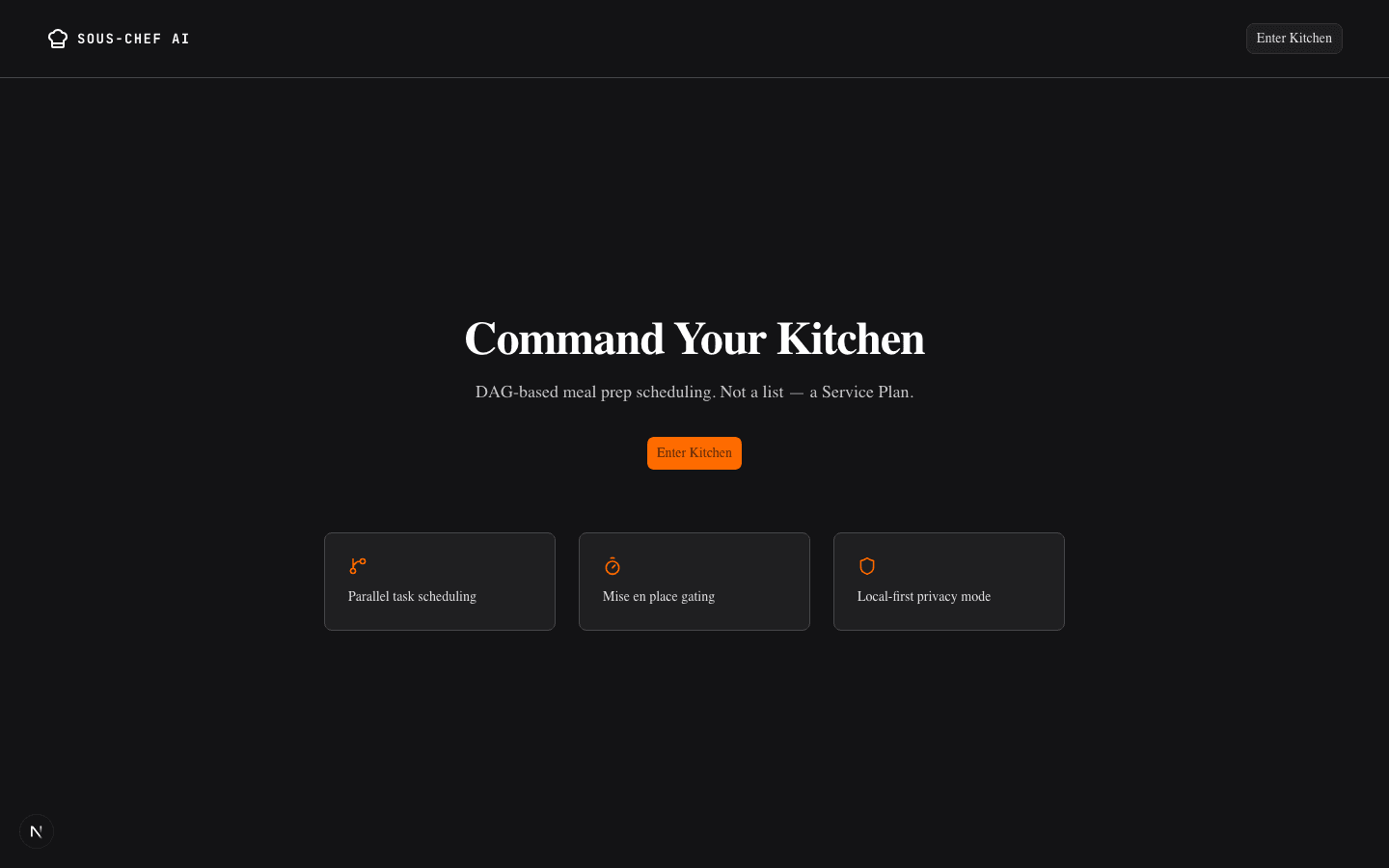
Landing page
Marketing entry point highlighting parallel scheduling, mise en place gating, and local-first privacy.
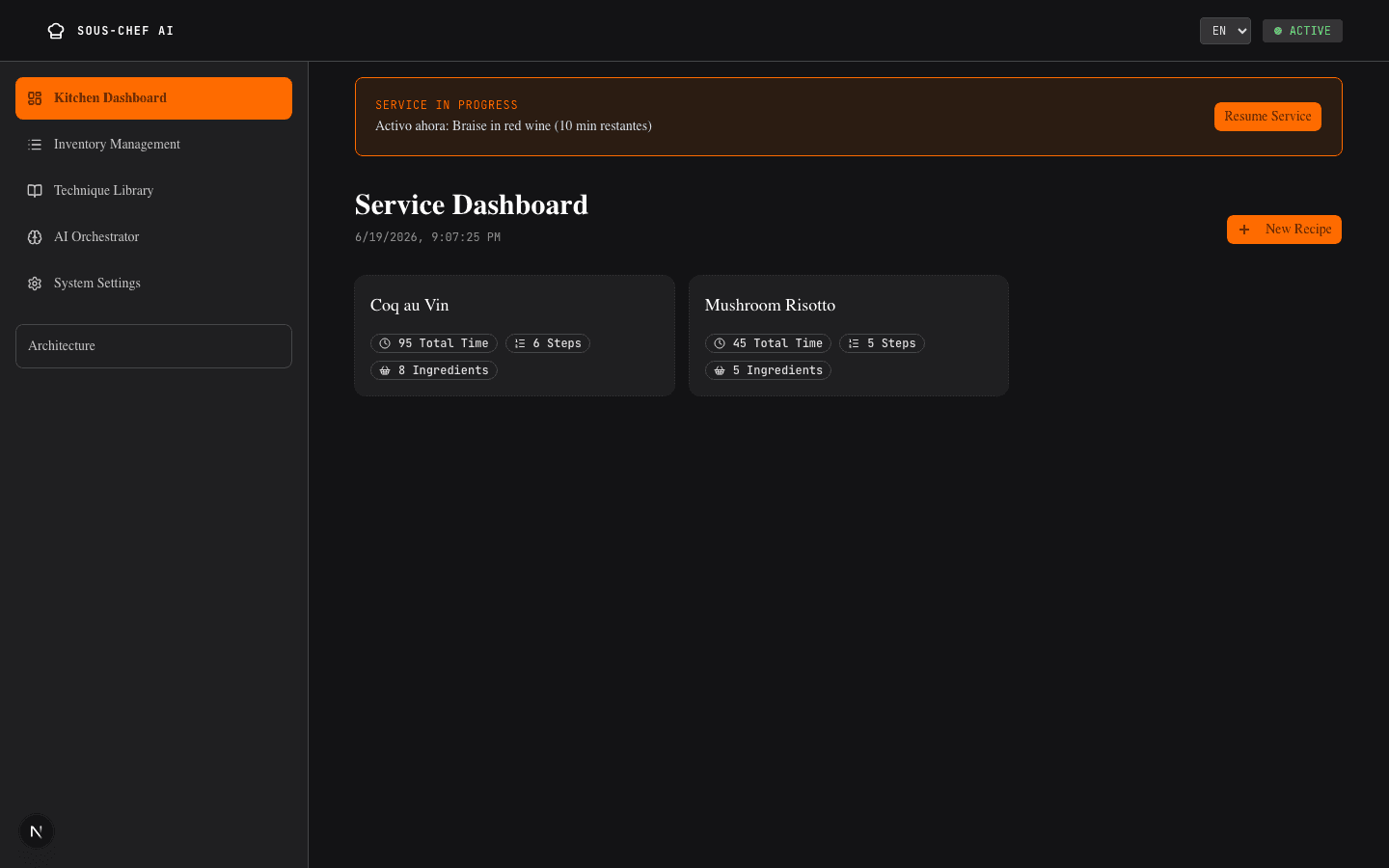
Kitchen dashboard
Recipe cards for Coq au Vin and Mushroom Risotto with step counts, durations, and active service status.
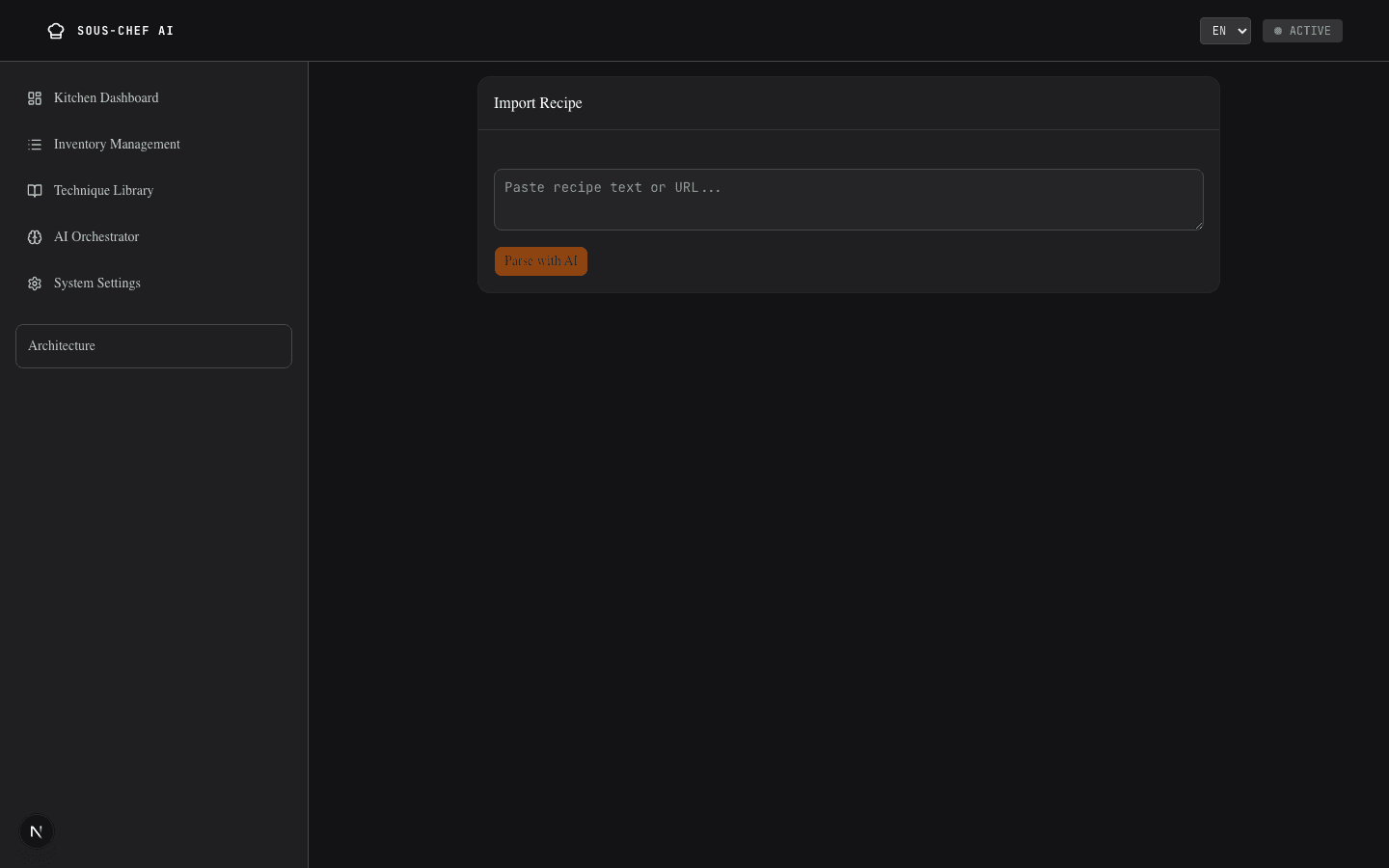
Import recipe
Paste recipe text or a URL and parse it with AI into structured ingredients and DAG steps.
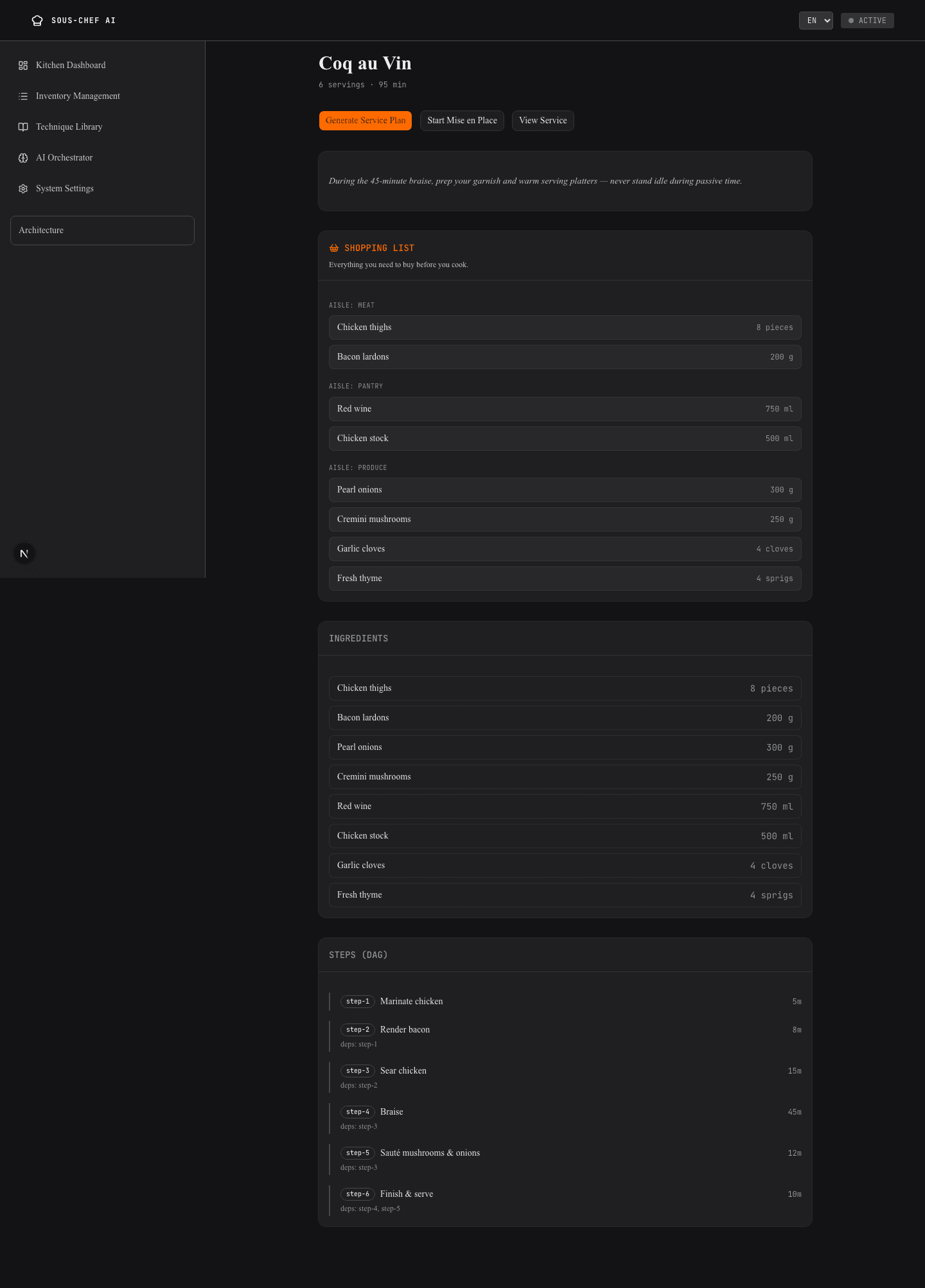
Recipe detail
Ingredients table, dependency-linked steps, and actions to generate a Service Plan or start mise en place.
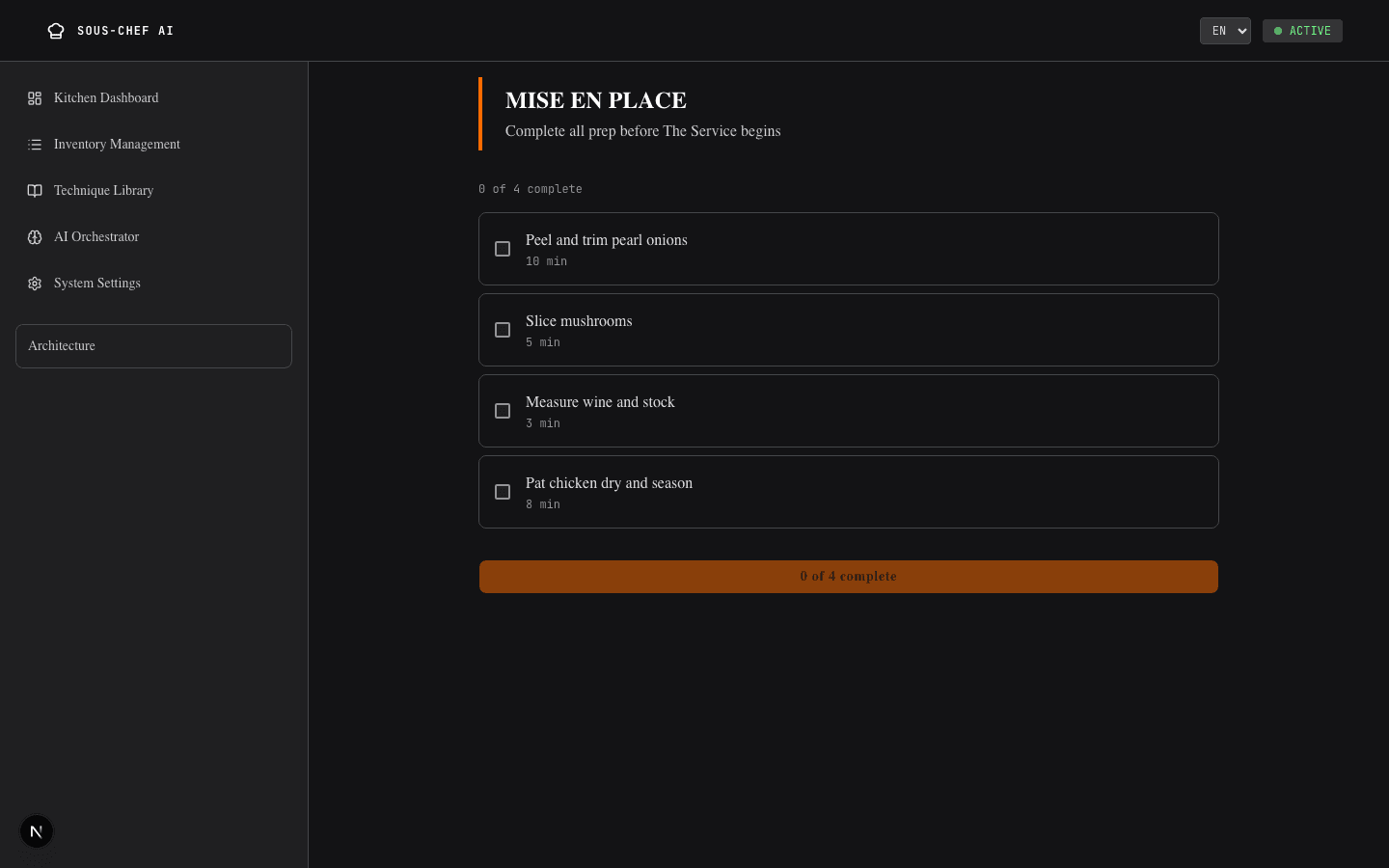
Mise en place
Prep checklist gates service start — complete all prep tasks before the live cooking timeline begins.
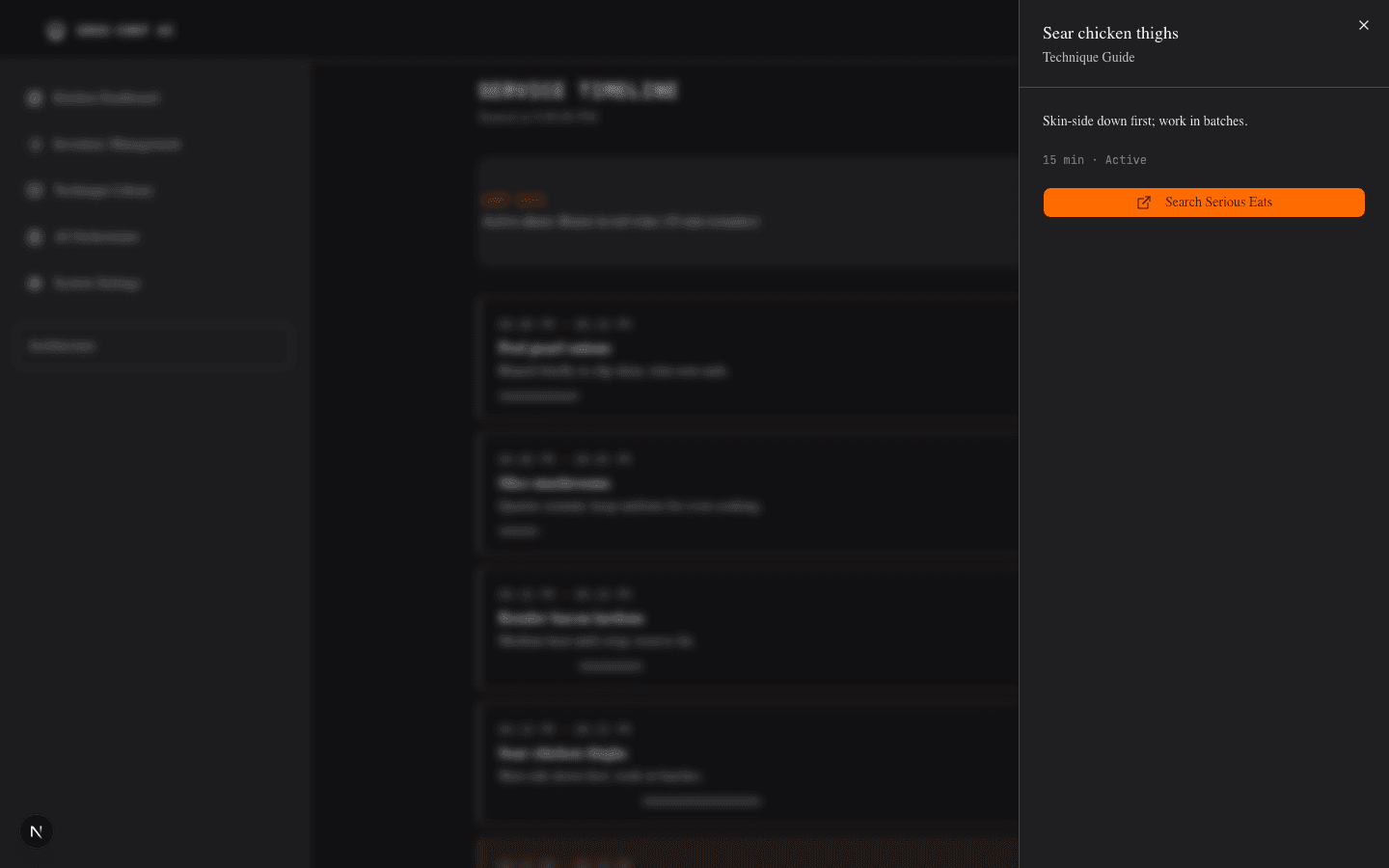
Technique drawer
During live service, open the technique drawer for the active step with a Serious Eats search link and step context.
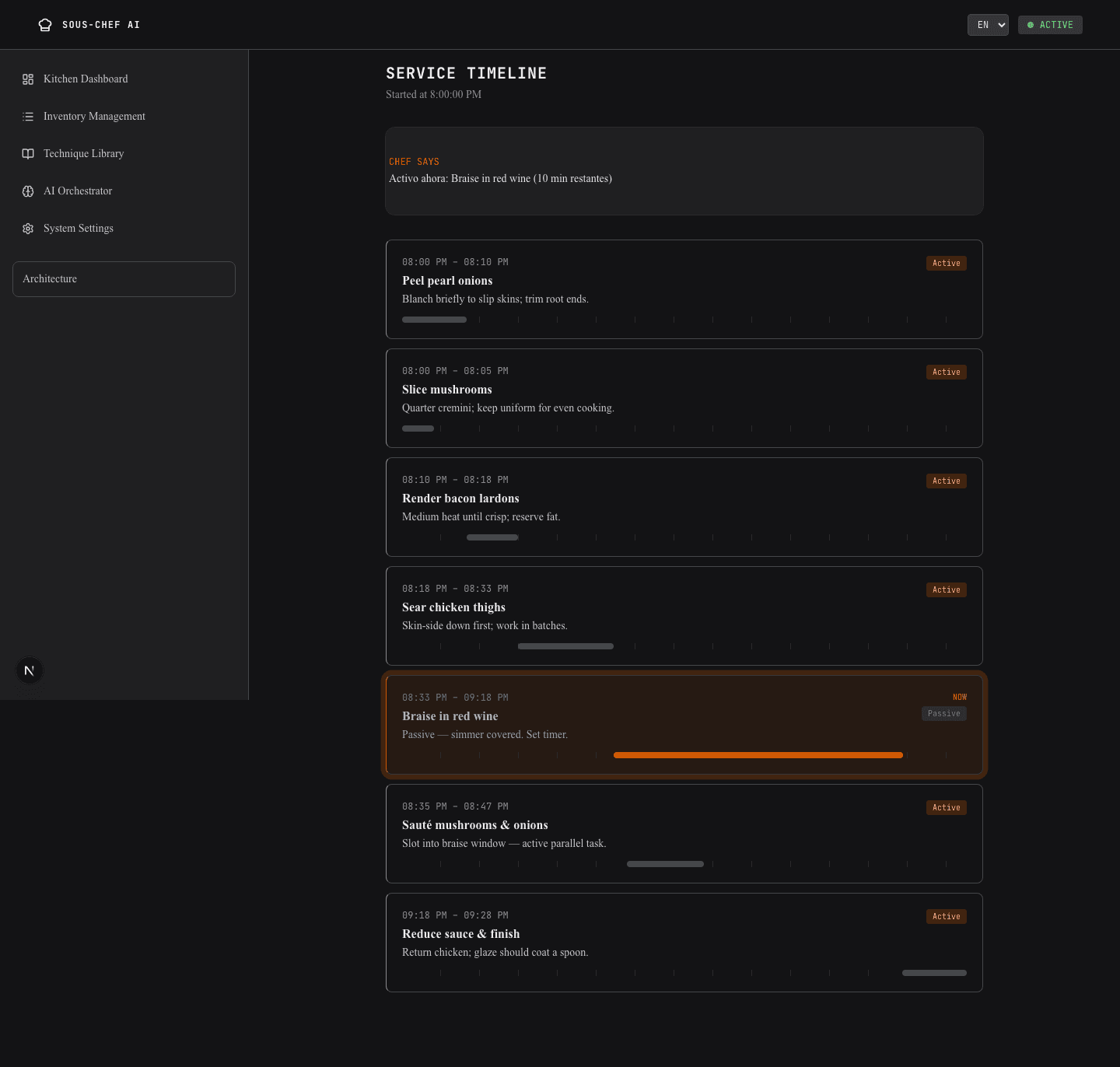
Service timeline
Gantt-style view with real clock times, parallel tasks, passive braising windows, and Chef Says nudges.
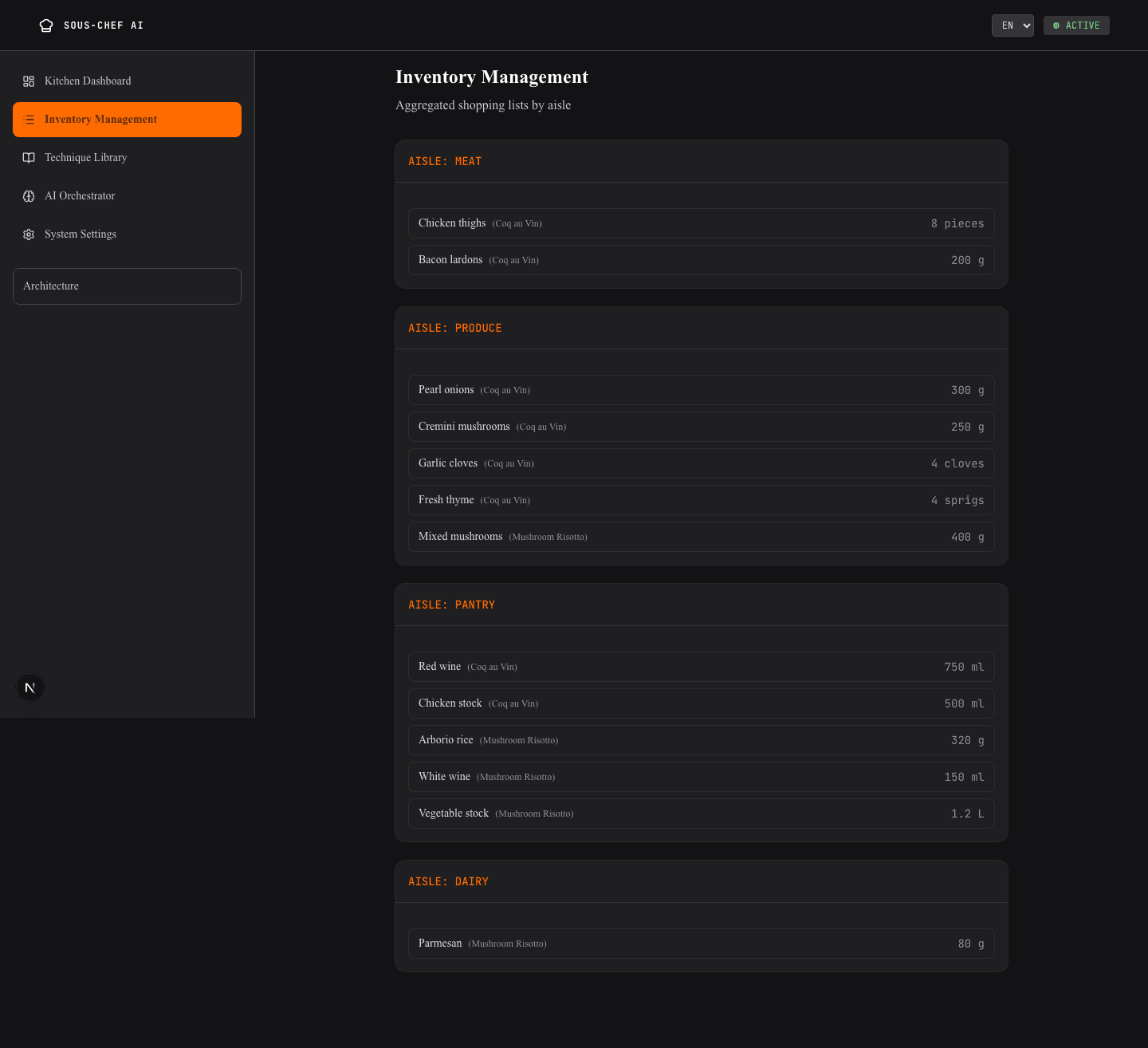
Inventory management
Aggregated shopping lists grouped by aisle across multiple recipes in the kitchen.
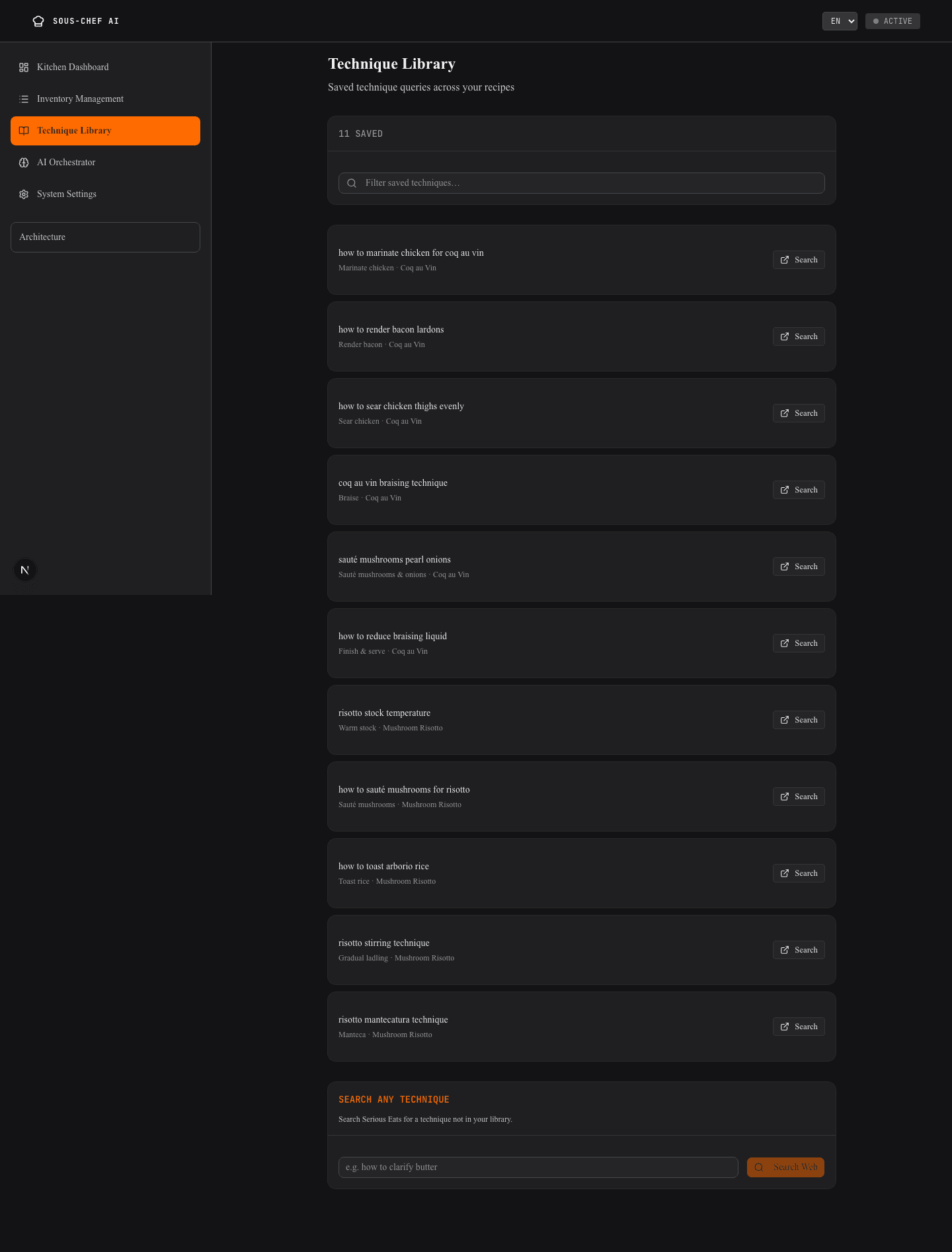
Technique library
Saved technique search queries per recipe step for quick reference while cooking.
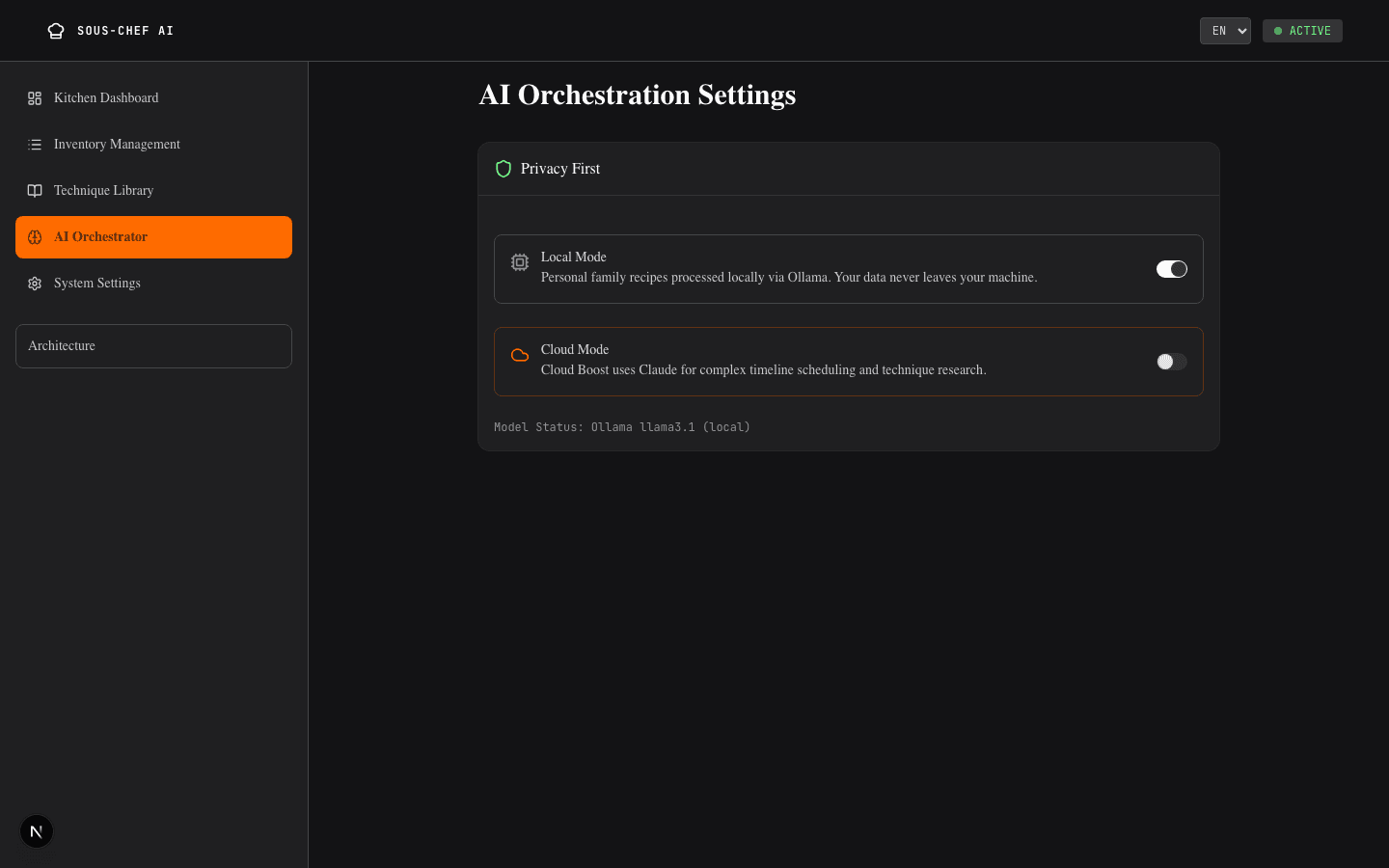
AI orchestration
Toggle Local Mode (Ollama) for on-device parsing or Cloud Boost (Claude) for complex timelines.
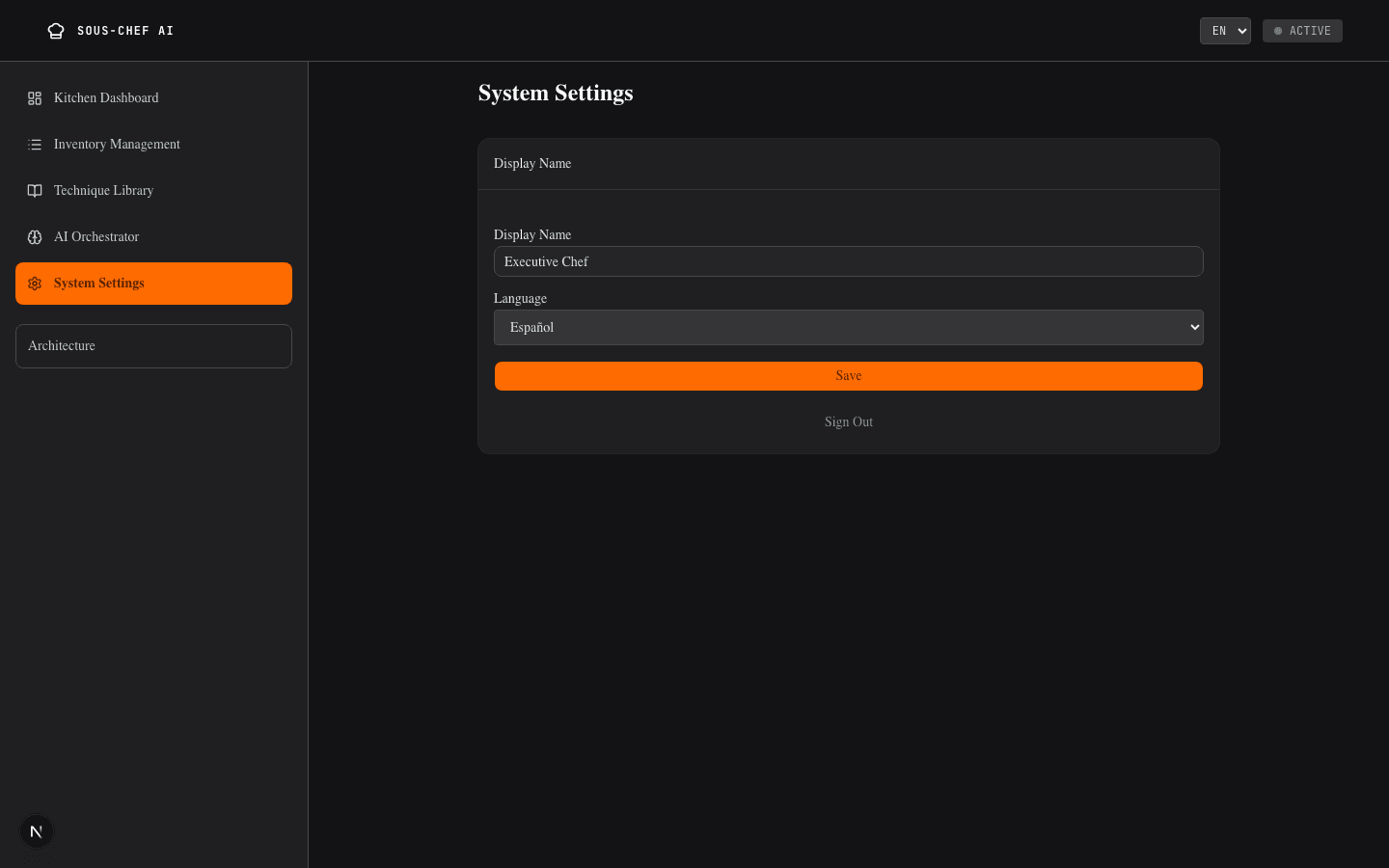
System settings
Display name, language preference, and account controls with next-intl localization.
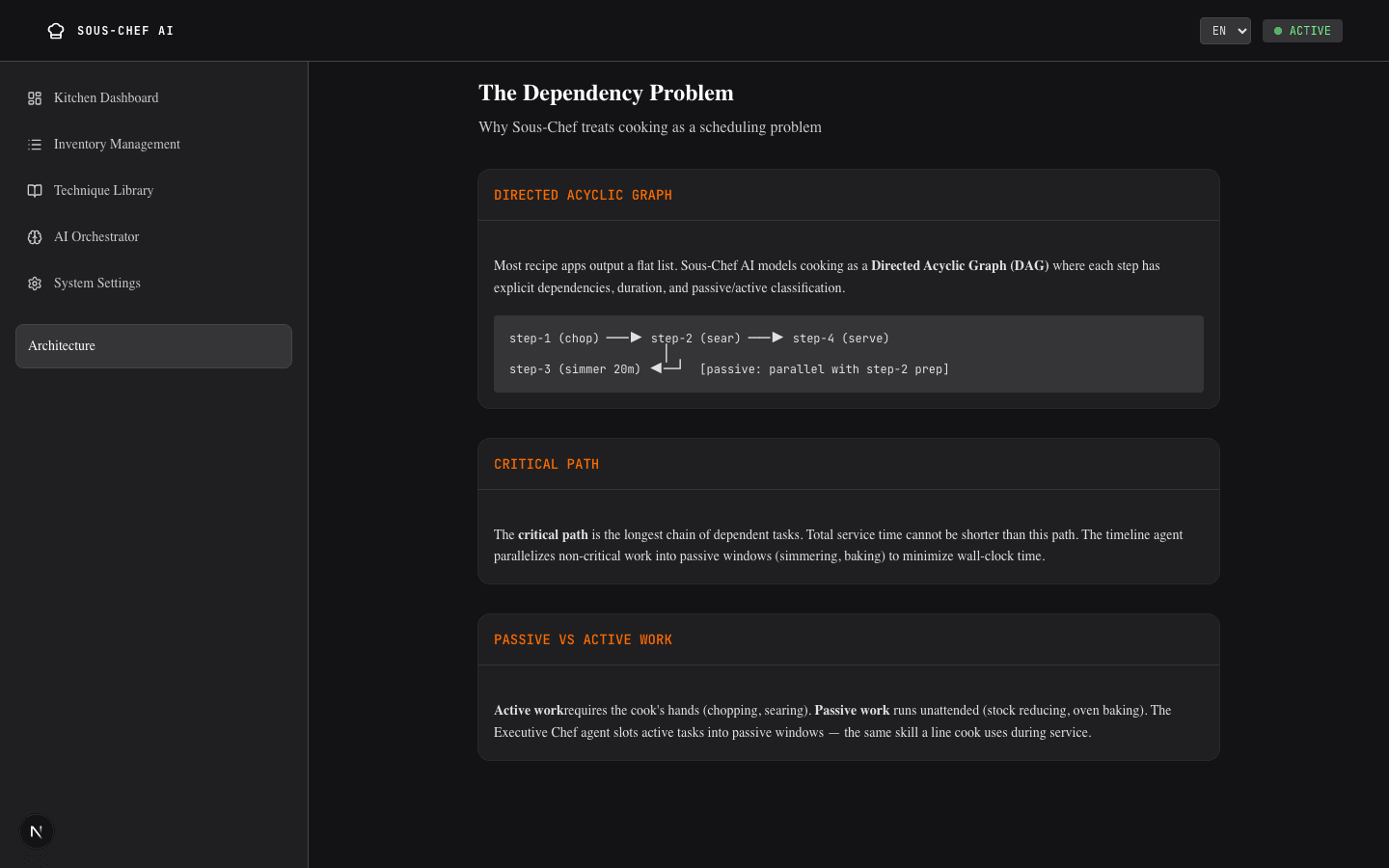
Architecture explainer
In-app diagram of the dependency problem: critical path, passive work, and why DAG scheduling beats flat lists.
Project highlights
- DAG-based scheduling with topological sort, critical path validation, and passive/active parallelization.
- Two Pydantic AI agents — Parser (recipe to structured steps) and Timeline (Master Service Plan) — with Python validation via ModelRetry.
- Local Ollama vs Claude cloud boost toggle for privacy-first family recipes or complex multi-course planning.